Showing posts with label Cooking. Show all posts

Friday, June 23, 2017

What I've Been Cooking Lately

It's been a while since I've posted about my cooking, but I feel like lately it's been worth mentioning. With the warmer weather there's so much summer produce already available - peaches, cherries, corn on the cob. I enjoy those all so much more now that they're only available during a specific season. I've also been trying out a few Japanese recipes here and there. It might be a terrible excuse, but I rarely cooking Japanese food because it's so readily available, and I always think that nothing I could make would taste as good or be as authentic. But the last three recipes I tried all came out really well!

Oyakodon - Chicken and Egg Rice Bowl

Fancy Brunch - Recipe from Smitten Kitchen

Gyudon - Beef and Sweet Onion Rice Bowl

Shiso Pasta - Shiso is a Japanese herb with a flavor similar to mint and basil

Prosciutto and Cherry Salad - Recipe from My Little Expat Kitchen
The Japanese dishes come from Japanese Soul Cooking.

See other JSC recipes:

Yakiudon
Mabo Dofu
Sapporo Soup Curry
Sesame Karaage
Omurice
Tan Tan Men
Pork Gyoza
Ebi Chili
Japanese Soul Cooking Review

Friday, November 27, 2015

Happy Thanksgiving

Another Thanksgiving is behind us. I'll probably be washing dishes all morning, but it is so worth it to have our house full of friends and laughter and good food.

I went back and read my blog posts for our past Thanksgivings - can you believe this is our fourth out here? It's interesting to remember different ways we've celebrated - we're definitely getting better at it, and to see what I've been especially thankful for each year. I don't think much has changed. I'm still thankful for family, and that with the internet it's so easy to stay connected to them. I'm thankful for John and how wonderful life is with him.  And of course for my friends. Honestly, I'm having trouble writing about what I'm thankful for because it all sounds so trite. So instead of rambling on, I'll just wish all of you a Happy Thanksgiving too!


Sunday, May 17, 2015

Yakiudon from Japanese Soul Cooking

A couple of days ago I made another recipe from Japanese Soul Cooking. Yakiudon is a stir-fried noodle dish, but unlike the more common yakisoba which uses ramen noodles, this uses the thicker udon noodles.

I scaled the recipe down to a single serving and made it for lunch, so I can only give you my own opinion this time, not John's as well, but he's not the biggest noodle fan, so no loss there. The recipe was very quick and simple to make. From taking the ingredients out of the fridge to sitting down to eat it only took me about fifteen minutes, and that includes taking photos.

As I was cooking I wondered if the recipe would be bland because the list of ingredients is so short: noodles, pork, cabbage, onion, and mushrooms with just a little soy sauce and sake. I did leave out one ingredient - the dried bonito (fish) flakes. I'm not the biggest seafood fan and I didn't know when I would ever use the rest, so I just decided to skip them. I'm sure they just increase the depth of savory flavor in the dish, so if it had been bland it would have been my own fault, but it turns out the recipe still works fine without them.

Much to my delight the noodles weren't bland at all. I think this recipe really encapsulates a lot of the tenants of Japanese cooking: simple fresh ingredients combined to create pleasant and harmonious flavors. All of the ingredients really complimented each other to create a satisfying meal. The portion size is also generous, it's very filling without being too oily or heavy.

Read About Other JSC Recipes:
Oyakodon/Gyudon/Shiso Pasta
Mabo Dofu
Sapporo Soup Curry
Sesame Karaage
Omurice
Tan Tan Men
Pork Gyoza
Ebi Chili
Japanese Soul Cooking Review

No strange ingredients this time


Tuesday, March 3, 2015

Mabo Dofu from Japanese Soul Cooking

One of the foods John and I have discovered while living here in Japan is Mabo Dofu (mapo tofu in chinese). It's a spicy, hearty, delicious Chinese dish made of tofu and ground pork that we love. I always think it's so interesting that in the US tofu is though of as a meat substitute, while in Japan it's just another ingredient that is often cooked with meat. While the Chinese version uses sichuan pepper, the Japanese version uses sansho, a Japanese pepper closely related to the sichuan pepper corn. Sansho has a lemony flavor and like sichuan pepper creates a tingly sensation on the tongue and lips. The actual spiciness of the dish come from the bright red tobanjan paste.

I've wanted to try this recipe since I first flipped through Japanese Soul Cooking last July, but I was afraid anything I made wouldn't measure up to what I've had in restaurants. Last week I bought the ingredients and then put it off for a couple days out of nervousness, but finally gave it a shot. Let me just say WOW, it is everything I hoped it would be! John took one bite and said it tasted exactly like it was supposed to.

Japanese mabo dofu is less spicy than the Chinese version, in accordance with the Japanese palate, but this recipe is pretty spicy - definitely calibrated to American tastes. John didn't think it was too spicy, but I refilled my water more than once during dinner. If you're sensitive to spicy foods, make sure you've got lots of rice and something cold to drink, or use a little less tobanjan.

The recipe was clear and easy to follow, as they usually are. The one thing I will emphasize is the step where it tells you to break the cooked ground pork up with a fork. I didn't break mine up enough, and John and I both noticed - you really want to smash it up a lot! I also used silken tofu in place of firm (and didn't follow the procedure to press more water out) because I think the restaurants here use silken tofu as well, but John disagreed and thought it would be better with firm tofu. I'm not sure I agree, but the takeaway here is probably that you can get away with either and should definitely use they type you prefer (if you have a tofu preference.) The last step is to sprinkle the sansho on "to taste." I didn't have any idea how much to use, but since it won't greatly impact the spiciness it's not something to worry too much about. I just pretended it was a salt shaker and gave the dish a quick sprinkle, and then put it on the table to add more if we wanted.

I definitely recommend this recipe, and encourage you to try mabo dofu if you've never had it. I know a lot of people think they don't like tofu (me too, some days!) but this dish is too great to miss out on.

Read About Other JSC Recipes:
Oyakodon/Gyudon/Shiso Pasta
Yakiudon

The ingredients

Tofu is such a funny food


Sansho

Simmering

Time to eat!

Friday, February 13, 2015

Soup Curry from Japanese Soul Cooking

I've finally gotten back to working my way through Japanese Soul Cooking, and last week I made the Sapporo Soup Curry. As a disclaimer, I have to admit I've never had Soup Curry before, but I love most curries, and the picture looked so delicious on a cold wintery night I had to try it.

John was less than excited when he got home because he'd had curry for lunch. Oops.

I was impressed with how simple the recipe was and how quickly it came together. I didn't need to buy any unfamiliar ingredients, and it was easy to chop up all the vegetables while watching TV. (We just got Hulu Plus, and I have been bingeing Nashville) 

The recipe calls for chicken legs, and I'll admit that I was tempted to use chicken breasts. But it seems like cheating to change a recipe and then review it. And the point here is to learn about Japanese cooking, not to adapt Japanese recipes to be more American. I will say that dark meat chicken is a lot harder to work with, it's just so slippery and wiggly even with a super sharp knife. But wow is the texture fantastic!

Overall, the soup was good but not great. I don't think I did a very good job of slicing the zucchini and eggplant into the shape I was supposed to, so there were rather large chunks that didn't have much flavor. And while the broth tasted like curry, the thinner texture of it being soup just made me miss the thicker texture of a normal curry. I wouldn't mind eating it again, but it's not something I would crave.

Read about other JSC Recipes:
Oyakodon/Gyudon/Shiso Pasta
Yakiudon
Mabo Dofu
Sesame Karaage
Omurice
Tan Tan Men
Pork Gyoza
Ebi Chili
Japanese Soul Cooking Review

I love chopping vegetables

It does't look too appetizing in the beginning 
Sapporo Soup Curry

Friday, November 28, 2014

Happy Thanksgiving (A Day Late)

Happy Thanksgiving! I hope everyone found a way to celebrate yesterday and had something to be thankful for. This year I am thankful for the wonderful friends we have here in Tokyo, for a husband who makes me happy every single day, and because I am going back to the US for Christmas and my mom's wedding in only a week and a half!

After our last two pitiful attempts at celebrating Thanksgiving I told John I didn't even want to try this year. In fact, I said we could go out for sushi or ramen but that would be the extent of our celebrating. But at the last minute we decided to give it another try, and it turned out to be our best Thanksgiving yet. Raku and her husband came, as well as a couple people from John's office and it was fun to have the house full and our table pulled out so extra chairs would fit. There was lots of food and laughing and plenty of champagne, and for the first time even though our families weren't here it felt right.

Turkey isn't that easy to find in Tokyo, but for the first time I found turkey breasts for sale at Nissin. Besides that we had two types of stuffing, two types of cranberry sauce, mashed potatoes, carrots, green beans, and pumpkin parfaits for dessert. A pretty awesome feat for two burners and a crock pot to handle!

Maybe it was because I had lower expectations, or maybe it's because I wasn't even sad to be away from family because I know I'll see everyone for Christmas, but I woke up this morning still smiling from how happy I felt. In the spirit of Black Friday shopping (which I've actually never participated in) Raku and I went out Christmas shopping today and I got lots of good stuff for everyone back home.


Tuesday, November 18, 2014

Sesame Karaage from Japanese Soul Cooking

A couple weeks ago I made another recipe from Japanese Soul Cooking. I was really excited to see a whole chapter on karaage, the yummiest of yummy fried chicken. I didn't want to try the standard recipe because I have a favorite place here that I didn't think I could top, but I was excited to try the sesame coated variant. It was an easy recipe to follow, with no unfamiliar ingredients.

Most karaage is made from chicken thighs, and some of it can still have a lot of skin or fat still left on it. But I really prefer chicken breast, so that's what I used, even though the recipe called for thighs. I was worried that the sesame seeds wouldn't stick to the chicken when it fried, but they stuck just like they were supposed to. About a million seeds came off in the frying, but it seemed to be because of the chicken shrinking as it cooked.

In the end , I have to admit I was disappointed. I had a really hard time keeping the oil temperature stable which resulted in really dry chicken. I partly attribute the problem to my IH stove, but also to my lack of experience deep frying. To be honest, deep frying always seems like more trouble than it's worth. While I was trying to get the right temperature I ended up over-marinating the chicken so it was super salty! And worst of all, I don't necessarily think the sesame seeds were an improvement on regular karaage.

If you're in Tokyo and you want some of the best karaage ever, I recommend going to the food hall in the basement of Tokyo Midtown in Roppongi. I don't know the name of the the place, but it's in between the Vietnamese food, and the fancy rice counter. I prefer the shio karaage which is white meat, but if you prefer dark meat, I bet the momo karaage is wonderful too.

Read about other JSC recipes:
Oyakodon/Gyudon/Shiso Pasta
Yakiudon
Mabo Dofu
Sapporo Soup Curry
Omurice
Tan Tan Men
Pork Gyoza
Ebi Chili
Japanese Soul Cooking Review

Marinating

Frying
If only it tasted as good as it looked


Sunday, October 19, 2014

Omurice from Japanese Soul Cooking

On Friday night I tried another recipe from Japanese Soul Cooking. This one was for Omurice, an omelet filled with fried rice. I'd never eaten omurice before, so I needed more knowledgable reviewers, luckily Raku and Leo came to the rescue.

To make the fried rice you start out by frying carrots, onions, and chicken, and then simmering them in a sauce made of chicken broth and ketchup. This recipe called for half a cup of ketchup, and I have to admit I was a little grossed out when I measured it. Once it thickens you mix in the rice and peas. Then it's just a matter of making the omelets. The recipe itself was very simple and easy to follow and I didn't have to buy any unfamiliar ingredients.

So here are my thoughts. It was hard to get all the filling inside the omelet neatly! When I put 1/4 of the filling into an individual omelet it seemed impossible, and the results aren't that pretty. Additionally, the consensus seemed to be that there was too much rice to egg in the ratio. I wonder if a) American eggs are larger than Japanese eggs (probably, yes) b) a larger frying pan would have given me more surface area to fill with rice without making the egg too thin (again, probably yes.) If you're concerned about presentation than be aware that trying to do any cutesy decorations can take an ominous turn when your medium is ketchup. I tried to draw a stick figure girl on Raku's omelet, and it seriously looked like a murder victim. (Note: the recipe did not recommend ketchup art, it's just something I have seen before and wanted to try)

Raku and Leo were very kind and said they liked the omurice, but they might have just been being nice. Everyone did agree that the egg to rice ratio was off. John was conspicuously silent, but he doesn't like omurice. And I thought the filling was too sweet. I like ketchup on my eggs, but this was just too much. I think a little less ketchup and a little more salt (maybe garlic salt?) would be more to my liking.

Read about other JSC recipes:
Oyakodon/Gyudon/Shiso Pasta
Yakiudon
Mabo Dofu
Sapporo Soup Curry
Sesame Karaage
Tan Tan Men
Pork Gyoza
Ebi Chili
Japanese Soul Cooking Review

Showing off my new apron from Karuizawa  
That's a lot of ketchup!
Mixing in the rice
Overstuffed omelets
I'm no artist, but why do these look so evil?

Tuesday, September 9, 2014

Tan Tan Men from Japanese Soul Cooking

I tried another recipe from Japanese Soul Cooking, and again it was a delicious success. The noodles were not the best, but the blame for that goes either to me or the manufacturer - the recipe itself is great.

Tan tan men is a Japanese take on a spicy Chinese noodle soup quite similar to ramen. The more recipes I try the fewer new ingredients there are for me buy and learn about. This time the only new ones were fresh ramen noodles (not exactly an unfamiliar product, but not something I've ever purchased before) and Japanese sesame paste. Japanese sesame paste or Neri Goma comes in black and white versions. I bought the white because the photo in the book didn't look like there was anything black in it, but I suspect either would be fine. I already had some tahini in the fridge and wondered how the two products would differ, so I gave them a quick taste test before I started cooking.  The neri goma is a lot thinner and liquidy, has a smoother consistency, and tastes a little sweeter. It could be drizzled from a spoon while the tahini was thicker and "gloopy" for lack of a better word. The tahini was grittier in my mouth and tasted a little bitter. If you can't find neri goma I think tahini would definitely work, but I'd thin it out by about 50% with water and add a pinch of sugar or honey.

The broth was really flavorful and so fragrant, John could barely wait to eat it. Luckily the whole recipe comes together in just a few minutes. The pork and green onions were perfect toppings, minimal but not lacking anything. The noodles however were kind of a disappointment. They were already cooked, I just needed to warm them up, but they had an oiliness to them that kept them from soaking up the yummy broth flavor, or really even from letting the soup cling to them as we slurped them up. Raku says this can be a problem with store bought noodles, but John inspected the packaging and says I bought yakisoba noodles. (Yakisoba is a stir-fried noodle dish made from ramen noodles) I argued that since it's made from ramen noodles these must be ramen noodles, but he was not at all convinced. Maybe the oil is a special thing for frying, or maybe there are other differences I just don't know about. I guess I'll have to try again and look for better noodles. Our final review was that the recipe is fantastic, but good noodles are essential.

I only made half the recipe, but there was some left over which I had for lunch the next day. When the broth cooled a layer of fat congealed on the top. I scraped this off and threw it away in an attempt to be more healthy. It still tasted really good, but most of the spiciness disappeared with the fat, so be aware if you try something similar.


Ramen (yakisoba?) Noodles and Neri Goma

Delicious Tan Tan Men

How jealous are you right now?


Tuesday, August 12, 2014

Pork Gyoza from Japanese Soul Cooking

I have been craving these gyoza (dumplings) since I first got Japanese Soul Cooking. I wanted to make them immediately, but it seemed a little to cruel to John (not that I was able to wait very long). Here's a sad story, when John and I were in Beijing four years ago he got food poisoning from some dumplings and hasn't been able to eat them since. Luckily those were steamed, and in Japan they're usually fried, so he's been very slowly trying to retrain himself on the fried ones, but the prospect of having them for dinner was not something he was excited about. Because of his lack of enthusiasm I invited Raku to dinner, so at least someone else would be excited. And John was actually a very good sport about eating them.

This recipe did not disappoint! They tasted delicious, they looked beautiful, the directions were clear. I whole-heartedly recommend this recipe. There were only two ingredients that were new to me this time, nira which are garlic chives, and rayu a spicy chili oil. There's actually a recipe in the book to make your own rayu, but honestly it seemed like a better education to go out and find it in my local supermarket. The nira were very easy to find, I've seen them before but thought they were green onions. There were two different types of rayu, one that seemed to be a filtered oil, and one that still had chili flakes in it. I opted for the chili flakes - yum!

The first step involves wringing out as much water as you can from the cabbage, and I was totally shocked how much there was. The recipe says it fills about 50 gyoza, but my tablespoons of filling must have been generous because I only got 38. There are great pictures that show how to crimp the wrapper together, but it still took my hands a while to get the hang of it. The good news is that you don't need to worry, they don't try and come open while cooking, and the frying is so beautiful it disguises any other flaws. Let me warn you though, filling and sealing them up takes a really long time. It's a good activity to do in front of the TV.

I made the gyoza hane (dumplings with wings) which involves mixing a little bit of flour into the water that cooks off, leaving a beautiful crunchy lace behind that connect the dumplings.  A Japanese friend made gyoza for me this way a year ago, and I was so excited when mine came out just like his. The recipe says to drizzle more sesame oil on after they're cooked, but I think they're great as is.

The final product was delicious - crunchy and tender, and bursting with ginger and garlic. When Raku arrived she said it smelled like her grandma's house, which I think is high praise indeed.

Read About Other JSC Recipes:
Oyakodon/Gyudon/Shiso Pasta
Yakiudon
Mabo Dofu
Sapporo Soup Curry
Sesame Karaage
Omurice
Tan Tan Men
Ebi Chili
Japanese Soul Cooking Review

New Ingredients: Nira and Rayu

Waiting to Be Cooked (see how my technique improves?)
Almost Done
Fireworks Beer - So Festive
Look at Those Wings
Yes, Please!

Wednesday, July 30, 2014

Ebi Chili from Japanese Soul Cooking

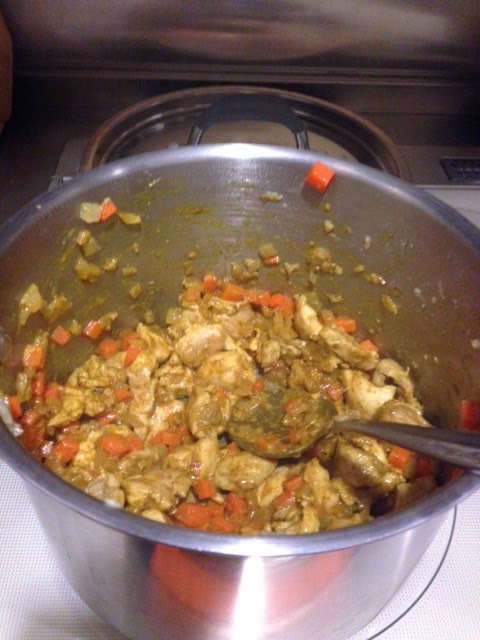
I made my first recipe out of Japanese Soul Cooking last week!  After going through the book several time I couldn't decided what to try first, but John made a request for ebi chili.  I was surprised because John normally isn't a big fan of shrimp, but the photos make it look SO good.  It's essentially a quick dish of shrimp cooked in a tangy spicy sauce that we both really enjoyed, though I would make a few small changes in the future.

One of the reasons I've been so excited about this book is because it breaks down and explains so many ingredients that are basic to Japanese cooking.  I've learned my way around the grocery store here, but there are still so many things I don't have the slightest idea about. For the most part I buy fresh ingredients that I can identify and make just about everything from scratch (no joke, last week we had tacos and I made homemade tortillas and homemade salsa!) It's pretty healthy since there's not much prepackaged or prepared stuff that I buy, but I'm still curious about all the mysterious things I can't identify.  For this recipe I got to buy four new ingredients: torigara (basically a powdered chicken bouillon base), tobanjan (a spicy pepper paste), sake (I know what this is, I've just never cooked with it before), and katakuriko (potato starch).  Before heading out to the store I did a google image search of all the ingredients (except the sake) so I would have an idea of what to look for.  Seriously, the amount of things I google on a daily basis is amazing.  I can't even imagine how difficult it must have been to live here before the internet.

The recipe was really clear and easy to follow.  It listed all the prep that needed to happen first so that I was all ready to go with the cooking which happens really quickly.  John and I both thought it tasted great.  There was a lot of flavor and a good amount of spice from the tobanjan.  It's definitely calibrated to the American palate rather than the Japanese, which I appreciated.  

So, here's what I would change.  The recipe called for a pound of shrimp to feed four, so I cut it in half for the two of us.  I actually bought 200 grams which is slightly less than half a pound because that's the size they were selling. I haven't cooked with shrimp very much, but wow did they shrink up! They started out looking the right size, and by the time they were done were about the size of pennies.  And 200 grams is not enough to feed two people. My pictures actually don't make it look as bad as it was, but I was mortified to feed it to John for dinner.  Thank goodness there was a lot of rice and edamame.  If you make this recipe, buy bigger shrimp than I did (even though mine were labeled for ebi chili) and make more! On the other hand, there was a lot more sauce than necessary.  If you looooove sauce, then by all means keep it as it is, but be aware it won't look like the photo in the book where the shrimp are deliciously coated in sauce - they'll be completely drowned and hidden in sauce.  At the end of our meal we still had so much left in the bottom of our bowls.  Next time I would make half of the sauce called for to the full amount of shrimp.  Despite these two issues, it was a quick and delicious recipe that I would happily make again.  Can't wait to try another recipe!

Read About Other JSC Recipes:
Oyakodon/Gyudon/Shiso Pasta
Yakiudon
Mabo Dofu
Sapporo Soup Curry
Sesame Karaage
Omurice
Tan Tan Men
Pork Gyoza
Japanese Soul Cooking Review

New Ingredients: Torigara, Sake, Katakuriko, Tobanjan

The Recipe

Dinner Time

Before and After (so much sauce!)

Tuesday, July 22, 2014

Book Review: Japanese Soul Cooking

Last week was my birthday (I'm entering the last year of my 20's!) and I was totally spoiled in every way. Raku and I went out for afternoon tea, John took me out for drinks at a brand new rooftop bar, and on top of that I got presents! Don't worry, posts are coming soon about the latest afternoon tea and the gorgeous, fancy, futuristic purse that John got me.  But today is all about the amazing cookbook Raku gave me!

If you've read this blog with any regularity (or if you know me) you know how much I love to cook. But I'll be honest, I don't usually love cookbooks. I love the idea of them, but sometimes they're fussy, or I want more explanation/description/direction, or the pictures are boring, or worst of all my palate/cooking style just don't match up with the book's.  I get most of my recipes from the internet either from food blogs that I love to read, or by trying to recreate something delicious I've eaten in a restaurant.

I know I've also expressed my gaijin guilt here before that while living in Tokyo I've been trying new Thai, Indian, Mexican, Korean, Greek, French, and Italian recipes and pretty much ignored Japanese food entirely.  Part of this is because it's so easy to just get Japanese here that it seems silly to cook it myself, but it's also partly because sometimes the ingredients are scary or I don't know what they are and where to find them.  I've looked at a few Japanese cookbooks, but so many of them are all about dishes that I am totally unfamiliar with even after more than a year and a half of living here, and require a LOT of effort for dishes that don't necessarily look like John or I might want to eat them.  At the same time there are a lot of Japanese dishes that John and I are growing to love, and I want to be able to make them someday when we can't just walk down the street to get them.

And that's where Raku, genius that she is, came to the rescue.  Japanese Soul Cooking by Tadashi Ono and Harris Salat is a gorgeous book full of Japanese recipes that I can't wait to make!  Each recipe gives a history of the dish, advice about how to serve it (from appearance to accompaniments), and an explanation of the Japanese ingredients, where to find them in Asian markets, and what to substitute from a regular grocery store if you can't find them.  There are beautiful photographs, some showing step by step techniques and other showing dishes and Tokyo street scenes.  The pages are thick and high quality, and for some reason I love that the photos aren't glossy.

The recipes aren't necessarily the healthiest, but they are all the things you'd find in home kitchens, lunch sets, and izakayas: gyoza (dumplings), karaage (fried chicken), ramen, curry, omurice, soba, and the list goes on.  I've never seen John show any interest in a cookbook, but even he looked through the whole book and couldn't stop commenting on how great the photography was and how delicious everything looked. I can't wait to cook my way through it and blog about all the recipes as I go!

Read About JSC Recipes:
Oyakodon/Gyudon/Shiso Pasta
Yakiudon
Mabo Dofu
Sapporo Soup Curry
Sesame Karaage
Omurice
Tan Tan Men
Pork Gyoza
Ebi Chili


Thursday, February 13, 2014

Around Akasaka

It's warmed up just the tiniest bit, and most of the snow has melted off, but there are still some cute snowmen hanging around.  I ran across this cute little guy wearing an instant ramen bowl as a hat. They're predicting more snow this weekend, so maybe there will be even more snowmen next week. I'm so excited to be on the beach in just a couple weeks!

Life is good in spite of the cold.  Today I saw a couple walking a ton of poodles, and one was being carried in a bag. Maybe he's got a hurt paw?  It's impossible not to smile though when a horde of little dogs goes running past you. Raku and I also got samples of the newest drink that Starbucks will be rolling out on February 15 - the Sakura Latte.  Sakura season is always big at Starbucks, they have limited edition tumblers and drinks that sell out quickly each year.  Last year I tried the sakura white hot chocolate and my eyes almost popped out from a sugar overdose. The sakura latte is a lot more enjoyable, but I suspect a full cup might still be too sweet.  It has the same sakura sprinkles/flakes on top that are really pretty, but they're where a lot of the super sweet flavor comes from.

In other news I made ribs in my slow cooker over the weekend and they were delicious!  It's not easy to find that cut of meat here, but Costco came to the rescue - a whole rack for only 1200 yen!  It easily fed 4 people! I also got some really great chipotle bbq sauce there too.  Honestly, it can be a pain to get there, but having a membership is soooo worth it!  Especially now that I know you can takkyubin (mail) the stuff home.  They'll ship anything that isn't perishable.  Raku and I normally split a huge box, and it only costs about 1000 yen.  Then we can haul more fresh fruit and cheese home with us on the train.

The dog on the right is wearing a sweater with floppy bunny ears on it. 

So pretty, but soooo sweet.


Friday, January 3, 2014

Masamoto Tsukiji Knives

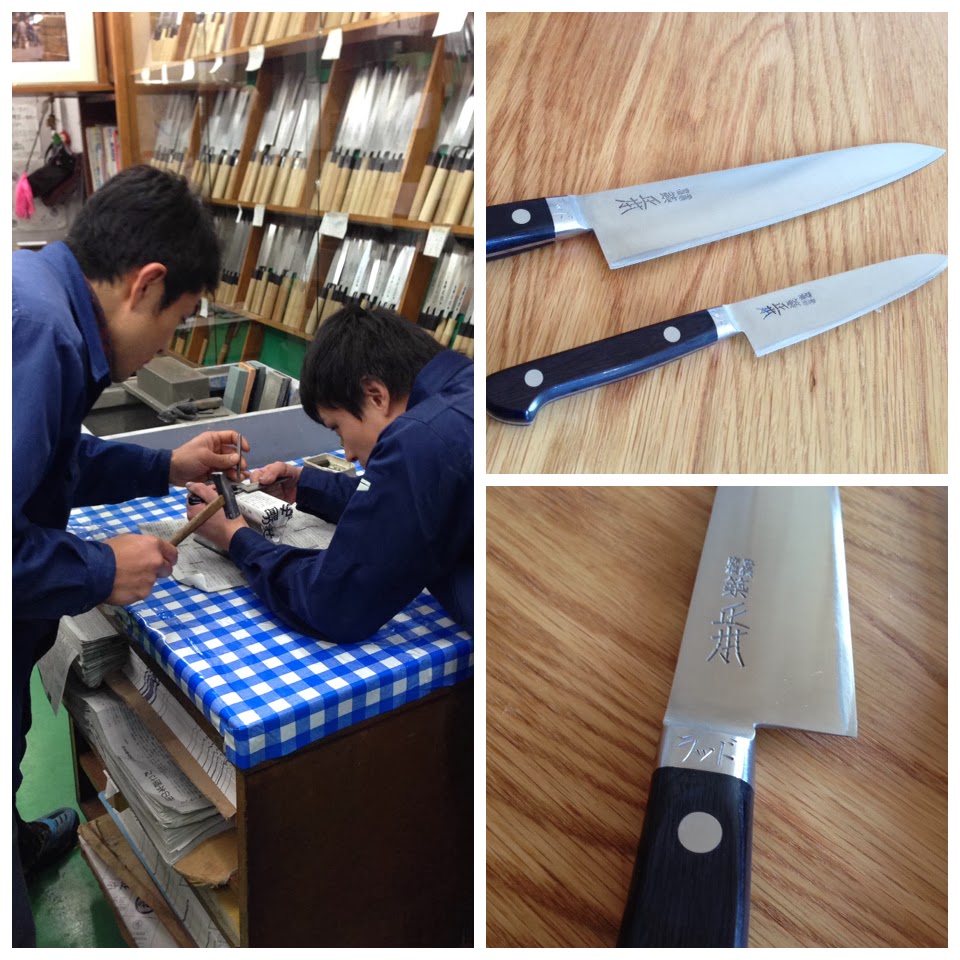
For Christmas this year John bought me two Japanese knives.  To be honest, I cook all the time and I've known for a while that the knives we have are pretty dull, but I didn't really know very much about good knives.  When John told me he wanted to take me to pick some out I nearly panicked because I wasn't sure I would know what to look for or even be able to appreciate such high quality knives.  So I took a while to do my research and get used to the idea, but when we finally went I was so excited!

What I learned is that Japanese knives are some of the sharpest in the world.  They're made in the same style as swords, and the steel they use can be sharpened to an exceptionally sharp blade, though it does make the knife a little more brittle.  You probably don't want to go hacking away at bones with these. Originally I assumed that Kappabashi would be the place to go, but the store I settled on is in Tsukiji, where the fish market is.  While Masamoto Tsukiji does sell knives for use at home, a great many of their knives are meant for restaurants and sushi chefs.

I chose a 210 mm gyuto knife, essentially an 8 1/2 in chef's knife, and a 120 mm knife for smaller jobs. The store sells both stainless steel and carbon steel, and I chose stainless which sacrifices only a small amount of sharpness for much more durability.  Even though they're stainless it's important to wash and dry them immediately after use, especially when chopping salty or acidic foods, something I've never actually been careful about before.  One of the most special things about these knives is that they will engrave your name in the knife, right there on the spot.  With the stainless steel blades they can only put it in the bolster, but with the carbon steel they can carve it right into the blade.  

I was a little nervous that it would be hard to get the knives, or that the proprietors would be annoyed to be selling to what would probably look like just another tourist.  They're craftsmen who have been doing this for hundreds of years after all.  But I was pleasantly surprised!  Everyone in the store was very kind and helpful, even joking around and making small talk with John in simple Japanese.  We saw a number of other tourists in the store, both American and Korean, and they were able to communicate in limited English phrases.  If you plan on asking lots of questions or asking for much guidance it would help to speak Japanese, but by looking at their website (with google translate) beforehand you should be able to get a good idea of what you want before going in.  This link goes straight to their stainless steal knives meant for home use.

Now that I've had the knives for about a week I have to say I'm in love.  Cutting everything is so fun! And so easy!  Honestly I want to say that cutting through potatoes or carrots or onions is like cutting through butter, but I tested it, and it's actually easier (if we're talking about cold butter, at least).


Hours: 6:00-3:00, closed Sundays and holidays
Phone: 03-3541-7155
Address: 4-9-9 Tsukiji, Chuo-ku, Tokyo

Saturday, October 26, 2013

Crock Pot Pumpkin Bread

Did you know you can bake in a crock pot? Move over rice cooker, I have a new (much more successful) BFF in the kitchen. Now that it's really fall I've been wanting to make pumpkin bread, and I came across a recipe to make it in a crock pot. I was pretty sure it would be a disaster like more than half of my rice cooker baking attempts are, but it worked like a dream!

You put the batter in a small loaf pan, and then the loaf pan sits in a water bath inside the crockpot to bake. Paper towels absorb the moisture as it cooks (genius!) so that it doesn't turn mushy and gross. When it was finished I was worried that the top looked too soft, but it was cooked all the way through, and even my toughest critic (my charming husband) liked it! I can't wait to make it again.

Yummy batter

Fingers crossed!

Will this really work?

Success!